In the misty, river-laced city of Liuzhou, nestled within the Guangxi Zhuang Autonomous Region of Southern China, a culinary tradition quietly thrives in the humid air of family kitchens. It is here that the art of fermenting bamboo shoots, a process both ancient and intimately familiar, transforms humble ingredients into the soul of one of China’s most beloved dishes: Luosifen. This is not the story of industrial production, but of the home kitchen, where a five-day fermentation method yields a condiment of unparalleled aroma and flavor—the family-style Liuzhou sour bamboo shoots.
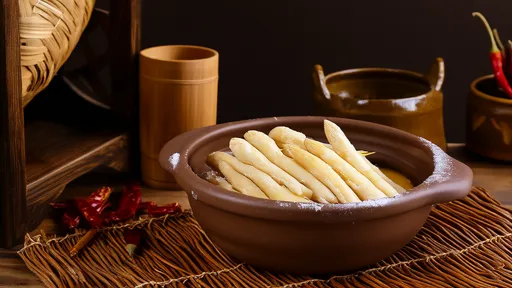
The journey begins with the selection of the bamboo shoots themselves. Not just any shoot will do. The preferred variety is the tender, spring-harvested Phyllostachys heterocycla, known for its delicate texture and subtle sweetness before its transformative encounter with fermentation. Families often have their trusted suppliers, or even forage for their own, ensuring the freshest possible start. The shoots are meticulously cleaned, their tough outer layers peeled away to reveal the pale, crisp heart within. They are then sliced into uniform strips or chunks, a preparation that is almost meditative, passed down through generations.
The magic, however, lies not in the preparation but in the alchemy of fermentation. The five-day method is a carefully orchestrated dance with microbes, a race against spoilage to cultivate the perfect tang. The cleaned and cut bamboo shoots are packed tightly into impeccably clean, traditional earthenware jars or modern glass containers. The crucial ingredient is not added, but cultivated: a brine. A simple solution of water and non-iodized salt is poured over the shoots until they are completely submerged, creating an anaerobic environment where harmful bacteria cannot thrive, but lactic acid bacteria can.
This is where time takes over. The jar is sealed, often with a water lock or a simple lid, and placed in a cool, dark corner of the kitchen. For the first day, nothing seems to happen. But beneath the surface, a microbial symphony begins. Wild Lactobacillus bacteria, naturally present on the bamboo shoots and in the environment, start to consume the natural sugars within the vegetable. Their metabolic process produces lactic acid, which acts as a natural preservative and, most importantly, imparts the signature sour flavor.
By the second and third days, the fermentation is vigorously active. Tiny bubbles may rise to the surface of the brine, a sure sign that the beneficial bacteria are feasting and multiplying. The aroma begins to shift from the fresh, vegetal scent of raw bamboo to something sharper, more complex, and undeniably funky. This is the point where experience is key. An experienced home fermenter knows by smell and sight exactly how the process is progressing, understanding that this potent aroma is the precursor to the deep, savory sourness to come.
The fourth day is a turning point. The aggressive bubbling subsides, and the fermentation enters a slower, more stable phase. The lactic acid concentration has risen significantly, perfectly pickling the shoots and bestowing upon them their characteristic firm-yet-yielding texture—a satisfying crunch that gives way to a soft interior. The flavor has matured from merely tart to a profound umami sourness, layered and complex. It is now recognizably the sour bamboo shoot, but it hasn't yet reached its peak.
On the fifth day, it is 正当时—the right time. The fermentation is halted. The jar is opened, and the kitchen is instantly filled with that unmistakable, pungent, and for aficionados, utterly irresistible fragrance. It is the smell of Liuzhou itself. The shoots have achieved a perfect balance: powerfully sour without being harsh, funky without being overwhelming, and still retaining a hint of their original sweet, bamboo essence. This is the gold standard, the moment the family cook has been waiting for. The shoots are ready to be eaten immediately, often simply as a condiment with rice congee, or they can be stored in the refrigerator, where the cold temperature drastically slows further fermentation, preserving them at their peak for weeks.
The significance of this home-fermented product extends far beyond its role as a simple ingredient. It is the beating heart of a regional identity. While instant versions of Luosifen have skyrocketed in global popularity, promising a taste of Liuzhou in minutes, they invariably rely on commercially produced, often pasteurized, sour bamboo shoots. These lack the vibrant, living complexity of the five-day home ferment. The family version is not a standardized product; each jar is unique, a reflection of the specific microbes in one kitchen, the minerality of the local water, and the subtle touch of the individual maker. It is a living food, teeming with probiotics, and a direct culinary link to the terroir of Liuzhou.
Ultimately, the family-style Liuzhou sour bamboo shoot is more than a recipe; it is a ritual. It represents a connection to the past, a patience in the present, and the preservation of flavor for the future. In a world of instant gratification, the five-day wait is a testament to the belief that the best things cannot be rushed. That potent,酸香 (sour aroma) wafting from a kitchen jar is the true smell of heritage, a signal that in this home, tradition is alive, well, and deliciously sour.
By /Aug 20, 2025
By /Aug 20, 2025
By /Aug 20, 2025
By /Aug 20, 2025
By /Aug 20, 2025
By /Aug 20, 2025
By /Aug 20, 2025
By /Aug 20, 2025
By /Aug 20, 2025
By /Aug 20, 2025
By /Aug 20, 2025

By /Aug 20, 2025
By /Aug 20, 2025
By /Aug 20, 2025
By /Aug 20, 2025
By /Aug 20, 2025
By /Aug 20, 2025
By /Aug 20, 2025
By /Aug 20, 2025
By /Aug 20, 2025
