In the quiet corners of tea culture, a subtle revolution brews—one that requires no kettle, no precise temperature gauge, and certainly no rush. Cold brew tea, particularly green tea, has emerged from the shadows of its coffee counterpart to claim its rightful place as a refreshing, nuanced, and profoundly accessible method of preparation. Unlike the quick, heat-driven extraction of traditional brewing, cold brewing is a patient art. It coaxes flavors slowly, gently, and completely, resulting in a beverage that is often smoother, sweeter, and less astringent. For green tea, a category celebrated for its grassy vibrancy and delicate constitution, this method is not just an alternative; for many, it is a revelation.
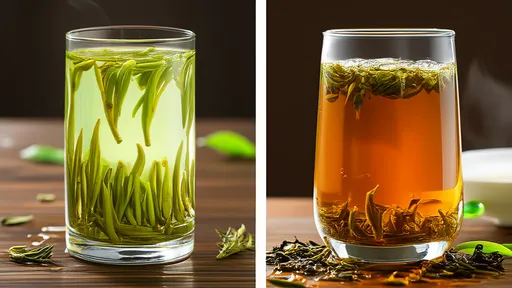
The central debate among cold brew aficionados isn't about whether to cold brew, but for how long. The timeline of steeping becomes the primary variable, the dial that tunes the final symphony of flavor. Two camps have formed, each championing a different duration as the path to enlightenment: the brisk and revitalizing 4-hour steep versus the deep and contemplative 8-hour steep. This isn't a matter of right or wrong, but a fascinating exploration of how time alone can dramatically alter the character of the same leaves.
Choosing a four-hour immersion is an exercise in capturing vibrancy. This method is for those who cherish the quintessential character of green tea—its lively, vegetal notes, its light floral hints, and its invigorating, almost spring-like quality. The shorter steeping time acts as a filter, primarily extracting the most soluble compounds: a bright hit of amino acids like L-theanine, which provides umami and sweetness, and the more delicate caffeine molecules. The compounds responsible for bitterness and astringency, namely catechins and tannins, are larger and more stubborn; they require more time to fully dissolve into the water. Consequently, a four-hour brew tastes exceptionally clean. It is a thirst-quenching, immediate drink, perfect for a hot afternoon. It’s the taste of green tea in its most playful and energetic form, a direct translation of the leaf's youth without the baggage of its deeper, more complex shadows.
Committing to a full eight-hour steep, often left to work its magic overnight in the refrigerator, is a different philosophy altogether. This is the path for those seeking depth, body, and a transformed flavor profile. Time becomes the alchemist. The extended contact between water and leaf does not merely continue extracting the same compounds more intensely; it begins a different process entirely. The initial bright notes are joined, and sometimes overshadowed, by a richer, more rounded ensemble. The slower extraction allows for a more complete dissolution of those larger polyphenols and polysaccharides. This results in a tea that is noticeably fuller-bodied. The umami sensation deepens into a brothy, almost savory quality. The grassy edges soften into flavors of steamed greens, nuts, and a subtle, honeyed sweetness. The caffeine extraction is more complete, but it's woven into a denser tapestry of flavor, making it feel less sharp. The astringency, while more present than in the 4-hour brew, is typically a pleasant, structured bitterness that adds complexity rather than harshness.
The choice between these two brewing epochs is ultimately a personal one, dictated by occasion, palate, and purpose. The 4-hour brew is your go-to for instant refreshment. It’s a social tea, a poolside companion, a quick pick-me-up that doesn't demand contemplation. It highlights the tea's origin and its freshest characteristics. The 8-hour brew, in contrast, is an experience to be savored. It’s a digestif, a slow-sipping tea for a quiet morning or evening. It creates a entirely new beverage from the same leaves, one that emphasizes transformation and depth over pure, unadulterated origin character. It’s less about the tea's raw state and more about what the process of time can conjure from it.
To conduct your own experiment, the process is beautifully simple. Use the same high-quality, loose-leaf green tea—a fresh Japanese sencha or a delicate Chinese dragon well (Longjing) are excellent candidates. Use the same cold, filtered water and the same tea-to-water ratio (a common starting point is 1 gram of tea per 100 ml of water). Divide the water into two vessels, add the tea, and start your timer. Place both immediately in the refrigerator. After four hours, strain the first batch thoroughly. Leave the second to continue its journey. The side-by-side tasting will be an education in itself, a clear demonstration of time's tangible impact on taste.
So, the next time you reach for your green tea, consider stepping away from the kettle. Embrace the slow magic of cold brewing. Whether you seek the bright, uplifting clarity of a short steep or the profound, soulful depth of a long one, the power is in your hands—and your timer. The battle
By /Aug 20, 2025

By /Aug 20, 2025

By /Aug 20, 2025
By /Aug 20, 2025
By /Aug 20, 2025
By /Aug 20, 2025
By /Aug 20, 2025
By /Aug 20, 2025
By /Aug 20, 2025

By /Aug 20, 2025

By /Aug 20, 2025

By /Aug 20, 2025

By /Aug 20, 2025
By /Aug 20, 2025
By /Aug 20, 2025
By /Aug 20, 2025

By /Aug 20, 2025
By /Aug 20, 2025
By /Aug 20, 2025
By /Aug 20, 2025
