Ginger is a staple in kitchens worldwide, prized for its pungent aroma and versatile flavor profile that enhances both savory and sweet dishes. However, anyone who has purchased fresh ginger knows the frustration of watching it shrivel, dry out, or become moldy far too quickly. Its knobby, irregular shape and thin skin make it particularly susceptible to moisture loss, leading to a rubbery texture and diminished flavor. This common kitchen dilemma often results in wasted food and money, prompting a continuous search for reliable storage solutions. While many methods are touted online and in cookbooks, from burying it in soil to submerging it in vodka, few are as surprisingly effective and simple as the humble wet paper towel technique.
The core principle behind this method is creating a microclimate. Fresh ginger, like most rhizomes, has a high water content. When exposed to the dry, circulating air of a typical refrigerator, this moisture rapidly evaporates through the skin. The ginger essentially dehydrates from the inside out, leading to the familiar shrunken, limp, and unappealing state. The goal of any good storage method is to drastically slow down this process of transpiration. By wrapping the ginger in a damp—not soaking wet—paper towel, you are providing a constant source of ambient humidity directly around it. This moisture barrier significantly reduces the rate at which the ginger loses its own internal water, effectively putting its aging process on pause.
Selecting the right ginger at the store is the first and most crucial step to ensuring long shelf life. Look for pieces that are firm to the touch with a smooth, taut skin. The ginger should feel heavy for its size, indicating good moisture content. Avoid any pieces that are wrinkled, have soft spots, or show signs of mold (often blue or green fuzzy patches). The skin should be thin and a pale gold-brown; thick, woody skin can be a sign of older ginger that has already begun to dry out. If possible, break off a small knob; it should snap cleanly and release a sharp, spicy fragrance. Starting with a fresh, high-quality ingredient is half the battle won.
Preparation is minimal but important. Do not wash the ginger before storing it. Introducing additional moisture, especially to any small nicks or cuts, can encourage mold growth rather than prevent it. Any soil can be gently brushed off with a dry paper towel or your fingers. If the piece is particularly large, you might consider breaking it into smaller, more manageable sections. This allows you to use one piece at a time without exposing the entire supply to air each time. However, each piece must be wrapped individually to maintain the integrity of the method.
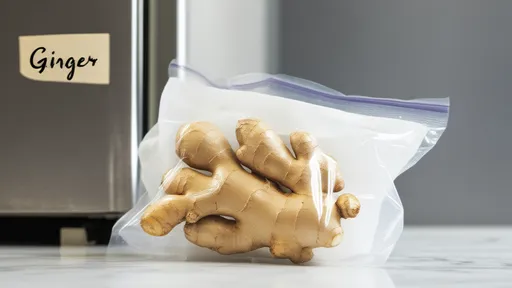
The execution is wonderfully straightforward. Take a sheet of a strong, absorbent paper towel and run it under cold water. Wring it out thoroughly until it is just uniformly damp; you want no dripping water. An overly saturated towel will make the ginger too wet, creating a soggy environment where rot and mold can thrive. Completely envelop the ginger piece in the damp towel, ensuring there are no exposed areas. The wrap doesn't need to be overly tight, but it should be snug. Next, place the wrapped ginger into a reusable zip-top bag or a sealed plastic container. The bag or container acts as a secondary barrier, trapping the moisture released by the towel and creating a stable, humid pocket. Press out most of the air from the bag before sealing it shut.
This carefully prepared package now belongs in the crisper drawer of your refrigerator. The crisper drawer is designed to maintain a higher humidity level than the main compartment, making it the perfect partner for this storage technique. The consistent, cool temperature of the refrigerator (ideally around 40°F or 4°C) further slows down any enzymatic activity and microbial growth, while the damp towel provides the humidity the crisper drawer tries to maintain. It’s a perfect synergy of appliance design and simple hack. Stored this way, your ginger will remain plump, firm, and incredibly fresh for weeks, and often over a month.
The beauty of this method is revealed every time you go to use your ginger. Unwrap a piece after several weeks, and you'll find it as firm and fresh as the day you bought it. The skin will still be taut, and when you cut into it, the flesh will be juicy and vibrant, releasing that potent, spicy aroma. There will be no signs of the dreaded desiccation that renders ginger a useless, woody nugget. The flavor will be at its peak, ensuring your curries, stir-fries, teas, and baked goods are infused with the best possible taste.
For those who use ginger less frequently, freezing offers an even longer-term solution, albeit with a textural compromise. You can freeze ginger whole, but it becomes impossible to grate or mince while frozen solid. A better approach is to peel it first (the skin will slide right off with the edge of a spoon) and then grate or mince it. Spread the fresh gratings on a parchment-lined tray, freeze until solid, and then transfer the frozen pellets to a zip-top bag. You can then scoop out exactly the amount you need without any thawing. Alternatively, you can blend peeled ginger with a little water and freeze the paste in ice cube trays. While the thawed texture is mushy and only suitable for pastes and liquids, the flavor remains excellent for many months.
Understanding why this method works so well requires a slight dive into food science. Refrigerators are notoriously dry environments because cold air holds less moisture. The constant cycling of the fridge's compressor further dehydrates the air. Food stored uncovered loses moisture to this dry air, leading to freezer burn on frozen goods and wiltage in fresh produce. The damp paper towel acts as a sacrificial buffer. It hydrates the immediate pocket of air around the ginger, so the ginger itself doesn't have to. The plastic bag simply prevents that locally humidified air from mixing with the drier air of the fridge, maintaining the stable microclimate. It’s a brilliantly passive system.
When compared to other common storage suggestions, the wet towel method stands out for its simplicity and effectiveness. Storing ginger unwrapped on the counter leads to rapid spoilage. Placing it unwrapped in the fridge accelerates dehydration. Submerging it in a jar of water or sherry requires changing the liquid regularly and alters the flavor. The wet paper towel technique requires no maintenance, uses tools already found in every kitchen, and preserves the ginger's flavor and texture perfectly. It is, without a doubt, one of the most reliable and clever kitchen hacks for minimizing waste and maximizing the potential of a fantastic ingredient.
By /Aug 20, 2025

By /Aug 20, 2025

By /Aug 20, 2025

By /Aug 20, 2025
By /Aug 20, 2025
By /Aug 20, 2025
By /Aug 20, 2025
By /Aug 20, 2025
By /Aug 20, 2025

By /Aug 20, 2025

By /Aug 20, 2025

By /Aug 20, 2025

By /Aug 20, 2025
By /Aug 20, 2025
By /Aug 20, 2025
By /Aug 20, 2025
By /Aug 20, 2025
By /Aug 20, 2025
By /Aug 20, 2025
By /Aug 20, 2025
