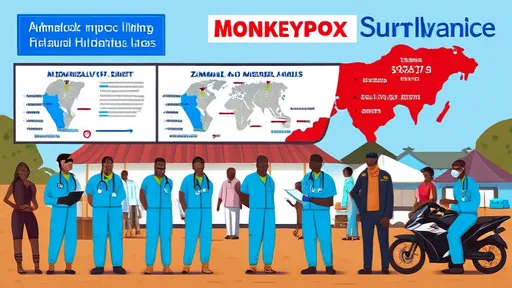
The Zambian health authorities have confirmed a total of 285 cumulative cases of monkeypox across the country, marking a significant public health challenge for the southern African nation. This development comes amid growing concerns about the spread of the viral disease beyond its traditional endemic areas, with Zambia now joining several other African countries grappling with outbreaks. The rising case numbers have prompted health officials to implement enhanced surveillance and containment measures while working to educate the public about prevention strategies.
Health Minister Sylvia Masebo provided the updated figures during a press briefing in Lusaka, noting that cases have been detected in multiple provinces with the highest concentration reported in urban centers. The minister emphasized that while the situation requires serious attention, the government has the situation under control with adequate medical supplies and trained personnel deployed to affected areas. She acknowledged that the 285 cases represent both active infections and recovered patients, with the majority falling into the latter category.
The first cases in the current outbreak were identified approximately three months ago, beginning as isolated incidents that have since evolved into a more widespread transmission pattern. Epidemiologists tracking the outbreak have observed that the initial cases appeared predominantly among individuals with recent travel history to neighboring countries where monkeypox is endemic. However, recent weeks have seen an increase in local transmission, suggesting established community spread in certain regions.
Monkeypox, a viral zoonotic disease, presents with symptoms similar to smallpox though clinically less severe. The incubation period typically ranges from 5 to 21 days, with initial symptoms including fever, intense headache, lymph node swelling, back pain, muscle aches, and lack of energy. This initial phase is followed by skin eruptions that tend to be more concentrated on the face and extremities rather than the trunk. The rash evolves sequentially from macules to papules, vesicles, pustules, and finally crusts which dry up and fall off.
Transmission occurs primarily through close contact with infected animals or humans, including direct contact with bodily fluids, lesion material, or respiratory droplets. Contaminated materials such as bedding can also serve as transmission vehicles. Health officials have stressed that unlike COVID-19, monkeypox requires much closer contact for transmission and does not spread as efficiently through airborne means. This characteristic has allowed for more targeted containment approaches focused on identifying and isolating cases and their close contacts.
The Zambian government has activated its national public health emergency operations center to coordinate the response across multiple ministries and international partners. Surveillance activities have been intensified at all points of entry, with thermal scanners and health declaration forms reinstated at major airports and border crossings. Health workers across the country have received specialized training on case identification, sample collection, and infection prevention and control measures.
Laboratory capacity has been significantly strengthened with support from international partners including the World Health Organization and Africa CDC. The University Teaching Hospital in Lusaka now serves as the primary testing center, with capability to process up to 100 samples daily using polymerase chain reaction technology. This enhanced diagnostic capacity has been crucial for early detection and has helped prevent further spread through prompt isolation of confirmed cases.
Treatment primarily involves supportive care and management of complications, as there are no specific medications approved exclusively for monkeypox. However, antiviral drugs developed for smallpox have shown some efficacy and are being used in severe cases. The smallpox vaccine has demonstrated approximately 85% effectiveness in preventing monkeypox, but mass vaccination is not currently recommended in Zambia due to limited global vaccine supplies and the relatively controlled nature of the outbreak.
Public health messaging has focused on debunking myths and providing accurate information about transmission risks and prevention methods. Community engagement teams have been deployed to markets, schools, and other gathering places to demonstrate proper hand hygiene and explain the importance of avoiding contact with wild animals, particularly rodents and primates which are known reservoirs of the virus. Traditional leaders have been incorporated into the response effort, leveraging their influence to promote health-seeking behaviors in rural communities.
The economic implications of the outbreak are becoming increasingly apparent, particularly in the tourism and hospitality sectors. Several international travelers have canceled planned visits to national parks and wildlife areas, fearing potential exposure. The government has moved quickly to reassure tourists that proper safeguards are in place, emphasizing that the risk to visitors remains low provided they follow recommended precautions.
International collaboration has been a cornerstone of Zambia's response strategy. The country is participating in regional information sharing platforms that allow for real-time exchange of epidemiological data and response experiences. Zambian scientists are contributing to global research efforts aimed at better understanding the genetic evolution of the monkeypox virus and its changing transmission patterns. This cooperation extends to joint border surveillance initiatives with neighboring countries to prevent cross-border transmission.
As case numbers continue to evolve, health authorities remain cautiously optimistic that the outbreak can be contained within the coming months. The relatively low mortality rate observed in the current outbreak - with no fatalities reported among the 285 cases - provides some comfort, though officials caution against complacency. Particular attention is being paid to protecting vulnerable populations including children, pregnant women, and immunocompromised individuals who may develop more severe disease.
The Zambian experience highlights broader concerns about emerging infectious diseases in a globalized world. Changes in climate patterns, increased human-animal interaction due to deforestation, and growing international travel create ideal conditions for pathogens to jump between species and cross borders. Health experts suggest that the current monkeypox outbreak should serve as yet another wake-up call for increased investment in national health security and stronger global health governance.
Looking ahead, Zambian health officials are preparing for multiple scenarios, including the possibility of case numbers increasing before they decline. Contingency plans have been developed for rapid scale-up of response measures should the situation deteriorate. These include protocols for establishing isolation centers, expanding testing capacity, and implementing more restrictive public health measures if necessary. However, authorities hope that with continued vigilance and public cooperation, such escalations can be avoided.
The World Health Organization continues to monitor the situation closely, providing technical guidance and mobilizing resources to support Zambia's response. While the organization has not recommended any travel restrictions, it advises travelers to practice enhanced hygiene measures and avoid contact with sick animals or people showing symptoms consistent with monkeypox. International health regulations emergency committees continue to assess whether the outbreak constitutes a public health emergency of international concern.
As Zambia navigates this public health challenge, the resilience of its health system is being tested once again, following the recent COVID-19 pandemic. The lessons learned from that experience have proven valuable in mounting a coordinated response to monkeypox. Health workers, many of whom are still recovering from the physical and emotional toll of the pandemic, have demonstrated remarkable dedication in confronting this new threat, working tirelessly to protect communities and prevent further spread.
The coming weeks will be critical in determining the trajectory of the outbreak. Epidemiologists are closely watching reproduction numbers and geographic spread patterns to forecast potential hotspots and allocate resources accordingly. Success will depend on sustained surveillance, rapid isolation of cases, effective contact tracing, and continued public cooperation with health measures. While the path forward remains uncertain, Zambia's proactive approach provides reason for cautious optimism in this latest public health challenge.

By /Oct 14, 2025
By /Oct 13, 2025

By /Oct 13, 2025

By /Oct 14, 2025

By /Oct 13, 2025

By Amanda Phillips/Oct 13, 2025

By /Oct 14, 2025

By /Oct 13, 2025

By /Oct 14, 2025

By Laura Wilson/Oct 13, 2025

By David Anderson/Oct 13, 2025

By Grace Cox/Oct 13, 2025

By /Oct 14, 2025

By /Oct 14, 2025

By /Oct 14, 2025
By /Oct 13, 2025
By /Oct 13, 2025

By /Oct 14, 2025
By /Oct 14, 2025

By /Oct 14, 2025
